

Choosing the right av supplier
Choosing The Right AV Supplier
Why an AV Supplier in Brisbane Can Make or Break Your Event
Audio visual may seem like just “equipment” but it is critically important and is a staple of any successful event. Clear sound, sharp visuals and seamless operation can make the difference between an event that engages your audience and one that leaves them bored or disengaged, especially now when people are exposed to so many live and on-line events in their workplaces or educational institutions.
An experienced AV supplier knows how to match equipment to your venue, audience and budget constraints. Whether it’s a corporate conference, university lecture, awards night, or live streamed event online. They carefully consider microphone types, speaker placement, lighting, screens and camera angles to ensure every attendee live in person or online can see, hear and connect with your content.
Getting your AV wrong can have serious consequences. Poor sound makes it hard for attendees to follow presentations, low quality visuals can distract or confuse and technical glitches in live streaming can frustrate online participants. These issues don’t just interrupt your event, they can damage your credibility, reduce engagement and leave your audience feeling like it was just another basic event they attended.
The right Audio Visual team mitigates these problems before they arise. Creating an experience that feels smooth, professional and memorable for all involved. With expert planning and support your event runs effortlessly. Your audience stays focused, and your message is delivered exactly as intended.
AV That Fits Your Event
When planning any event, the audio visual or AV setup is one of the most critical elements yet it is often overlooked until the last minute. Every event is unique and understanding the technical requirements for your specific type of event can make a significant difference in the audience experience. Factors such as room size, ceiling height, seating arrangements, lighting conditions, and audience size all influence what type of microphones, speakers, screens, or projectors are needed.
For instance, a small boardroom meeting may only require a couple of wireless microphones and a compact speaker system, while a large lecture hall may need multiple microphones, higher powered speakers, and strategically positioned display screens to ensure everyone can hear and see clearly. Event format also plays a key role - Panel discussions may require individual microphones for each speaker whereas stage presentations may benefit from a combination of lapel, handheld or lectern microphones. Considering these variables in advance ensures that technical elements are integrated seamlessly into the event, improving both accessibility, content delivery and audience engagement.
Understanding these basics allows a quality AV event partner to make knowledgeable decisions and to make informed recommendations to you, the event organiser. A well matched AV plan doesn’t just support the event, it ensures that content is delivered clearly, professionally and effectively to all participants.
Live Streaming Considerations
Live streaming has become increasingly common for events, allowing audiences to participate from anywhere in the world and extending the reach of conferences, lectures, awards nights, and corporate presentations beyond the limitations of a physical venue. While live streaming offers tremendous opportunities for engagement, it also introduces a range of technical considerations that differ significantly from standard in-person presentations. Successful streaming requires very careful co-ordination across all the audio visual components to ensure a professional and seamless experience.
Streaming platforms vary greatly in their technical requirements. Factors such as internet bandwidth, encoding settings and the platforms compatibility with multiple audio and video sources can significantly affect the quality of the broadcast. For hybrid events, integrating live streamed content with in room audio and visuals ensures that remote participants have a similar experience to those attending in person but does not come without its challenges from a technical perspective. Ensuring your AV partner understands these requirements and the differences between platforms will allow them to make informed recommendations on which platform may be the best suited to your event, your preferences and budget constraints.
Preparation is essential. Planning for contingencies such as network interruptions, backup cameras or alternate audio sources can prevent interruptions that might otherwise negatively impact the audience experience.
Technical Planning and Troubleshooting
Planning a successful event goes beyond selecting equipment. It requires understanding potential technical challenges and how to address them. Common issues include feedback from microphones, video lag or latency, connectivity problems, integration with existing equipment in the venue or in some instances, equipment failure. By anticipating these challenges a quality audio visual supplier can implement preventative measures such as testing equipment in the actual venue prior to the event, preparing backup systems, adding redundancy equipment and understanding basic troubleshooting techniques.
Signal flow refers to the path that audio and video signals take from their source devices such as microphones, cameras or computers through to output destinations like speakers, display screens or streaming platforms. Understanding signal flow is a fundamental part of event planning as it ensures that all components of the AV system work together seamlessly and helps prevent interruptions or technical issues during an event.
Problems with signal flow can occur when cables are incorrectly connected, inputs and outputs are mismatched, or devices are improperly configured. These issues can result in distorted or uneven audio, blank or flickering video or complete signal loss. If these occur during critical moments, a presentation, lecture, or live-streamed event can very quickly be interrupted and can be very embarrassing to all involved. In very rare occasions, this can not be anticipated however careful planning and testing ensures the best chance of having zero issues on the day.
Event Specific AV Requirements
Different event types have distinct AV requirements:
Corporate events require clear audio for speakers, multiple display options for presentations and sometimes live streaming for remote guests. High-quality microphones, reliable speakers and well positioned displays are critical for effective communication.
Educational events such as lectures, workshops and ceremonies benefit from a setup that ensures visibility and audibility for all participants and attendees. Recording or streaming options are very commonly added and accommodate interactive elements like online and live Q&A sessions or multimedia presentations. Event recordings can be extremely valuable to share with colleagues or guests that could not attend on the day or to use as a teaching reference in the future.
Hybrid and fully online events require careful co-ordination to ensure that both in person and remote audiences have a seamless experience. Achieving this involves synchronising audio and video, using multiple camera angles to capture the action and ensuring the technology is well chosen and configured to prevent interruptions or to reduce buffering. Remote participants rely on these technical elements to experience the event as clearly and engagingly as those attending on-site, making thoughtful planning and setup essential for delivering a professional, inclusive presentation.
Understanding the specific requirements of an event allows an audio visual provider to design AV setups that are carefully tailored to both the audience and the content being delivered. This involves assessing factors such as the size and layout of the venue, the number of attendees, the type of presentations or performances and the technical demands of any multimedia elements. By taking these considerations into account, your event AV provider can select the most appropriate microphones, speakers, displays and streaming solutions ensuring that audio is clear, visuals are sharp and the technology enhances rather than distracts from the event. Rather than relying on generic one size fits all equipment, this thoughtful approach ensures that every participant whether in the room or joining remotely can fully engage with the content.
Summary
Choosing a quality AV provider is one of the most important decisions for any event. Audio and visual elements are central to audience engagement and even minor technical issues such as poor sound, sub-par visuals or interrupted live streams can disrupt presentations and diminish the overall experience. A professional AV provider brings more than just equipment to the table. They offer expertise in planning, setup and real-time troubleshooting coupled with a supportive approach and ensuring every aspect of the event runs smoothly.
The right provider understands the specific needs of your event, whether it’s a conference, educational lecture, awards night, celebration or a virtual gathering. They can recommend the best equipment to match the venue, audience size, and content requirements. By partnering with an experienced AV team, organisers can focus on delivering their message, confident that the technical side is handled efficiently. Ultimately, choosing a skilled AV provider enhances audience engagement, creates a professional and polished environment, and ensures that your event leaves a lasting, positive and professional impression.
The Importance of Sound in Events
Why Clear Sound is the Cornerstone of Every Successful Event
When planning an event, most organisers think first about the visuals, the stage design, the lighting, the decorations or the presentation slides. These elements are all important but they often overshadow what is arguably one of the most crucial factors - sound. If attendees cannot hear clearly, everything else loses its impact. A beautifully designed stage or an engaging PowerPoint means only so much if the audience spends half the time straining to catch the words being spoken. In fact sound quality is consistently one of the top complaints when events fail to deliver. People may forgive a slightly dim projector but muffled voices, screeching feedback, or uneven audio coverage can frustrate guests almost immediately.
Sound is the foundation of communication. It carries the ideas, the energy, and the emotion behind every speech or performance. For corporate events, education sessions, live streamed conferences and even social celebrations, audio is what ensures messages are delivered effectively. When it is done right audiences remain engaged, attentive and immersed in the experience. When it is done poorly they disengage quickly and the delivery of the event is undermined.
The Acoustic Challenges of Event Spaces
Good sound design begins with the venue itself. Every room has its own acoustic characteristics that influence how audio travels. Large rooms with high ceilings can generate many different audio complications making speech difficult to understand. Smaller and enclosed spaces may trap sound, amplify background noise and become more prone to audio feedback when microphones and speakers are placed in close proximity. Outdoor venues pose yet another challenge as sound disperses without walls or ceilings to reflect it while wind and ambient noise from the general outdoors can interfere.
These challenges make professional audio visual planning essential. A specialist AV team knows how to assess the acoustics of a space, anticipate problems and design a system that delivers consistent clarity. This involves choosing the right style of microphone or microphones, positioning speakers to cover the entire audience evenly and using processing equipment fine tune the sound to the space. Without this level of planning, even the most polished presentation can lose it’s impact.
Microphones: Matching the Right Type to the Event
At the heart of any audio system is the microphone however not all microphones are created equal. Each type has specific strengths, and weaknesses. Selecting the right one can dramatically transform the quality of sound.
Lapel microphones, also known as lavalier mics are small, wireless and clip discreetly onto a presenter’s clothing. They are ideal for lectures, workshops and presentations where mobility is important. However they require very careful placement as they can easily pick up clothing noise and produce muffled sound if positioned incorrectly. Heavy necklaces, jewellery and items such as scarves are particularly problematic with these microphones.
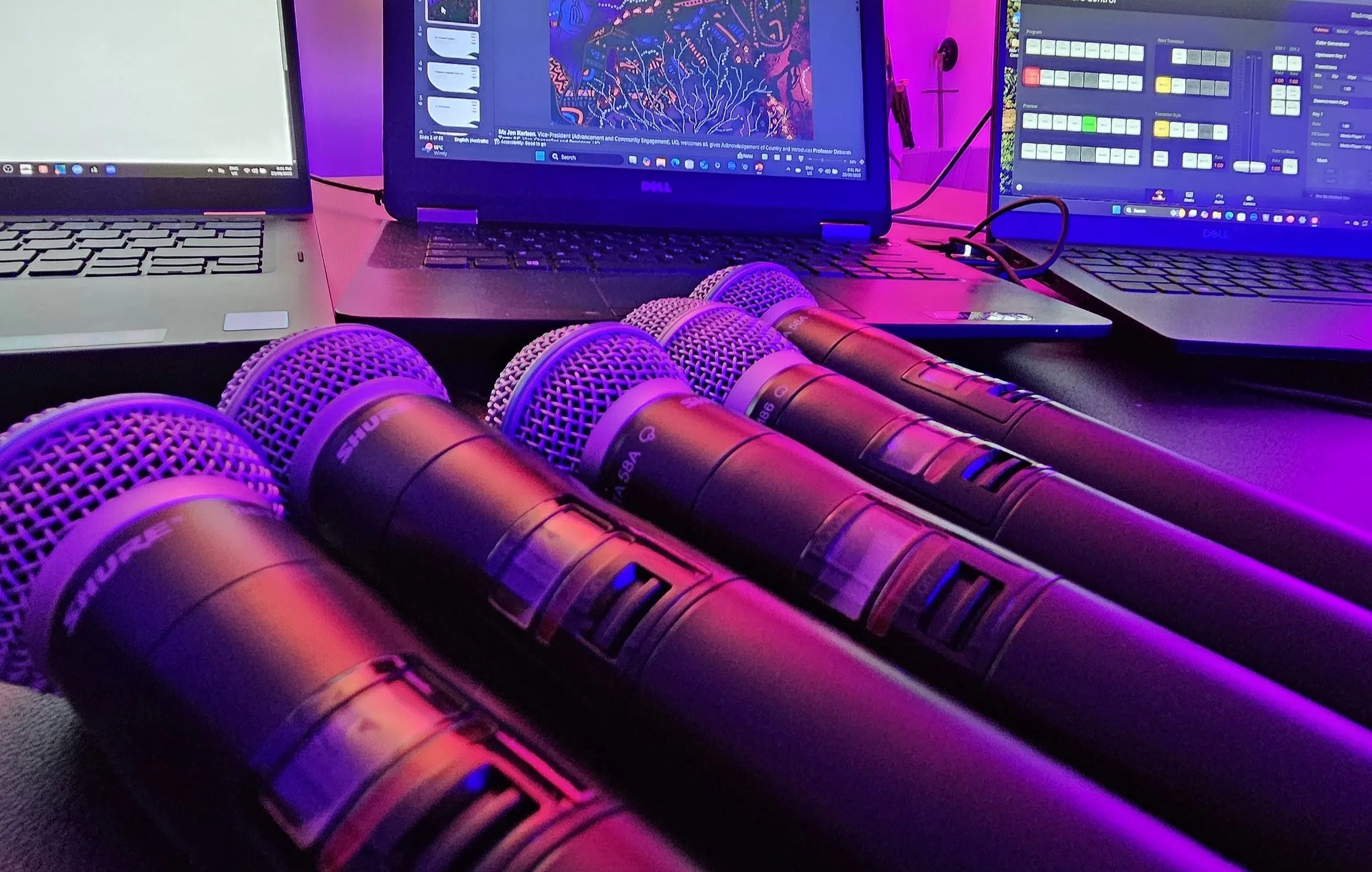
Wireless handheld microphones are a popular choice, particularly for interactive sessions such as Q&A segments or panel discussions. Their portability allows them to be easily passed between speakers and many presenters who are unfamiliar with lapel microphones and their particular nuances prefer them for their simplicity. In many cases handheld microphones also provide slightly higher sound quality which makes them a very reliable and trusted option.
Lectern or podium microphones are designed for generally more formal settings such as keynote speeches, ceremonies and corporate conferences. These microphones are mounted on the lectern and provide consistent audio without requiring the speaker to hold a device. They help maintain a professional appearance while ensuring clear, stable sound. Because they are highly sensitive, very careful setup is required to avoid feedback or unwanted noise. Lectern microphones are normally not the best choice for outdoor events or where there are large amounts of background noise.
Speaker Placement and the Science of Sound Distribution
Speakers are the delivery end of any audio system. While microphones capture sound, it is the speakers that project it to the audience. Their placement and quality directly determine how clearly a message is heard. Poorly positioned speakers can create uneven coverage, leaving some areas too loud and others too quiet. This inconsistency disrupts audience focus and diminishes the overall experience.
Sound interacts with a space in very complex ways. Professional audio visual specialists take these factors into account when designing a speaker system. They calculate the best positions, angles and number of speakers needed to ensure the optimum coverage for the audience attending and event.
Modern speaker systems are often paired with additional audio processing equipment to refine clarity. Put relatively simply, equalizers adjust frequencies to prevent harsh or muddy sound, control the tone and minimise room feedback issues. Compressors manage volume spikes and assist with general clarity of speech, mixers balance all the multiple audio sources together and balance the difference between loud and softly spoken presenters. These tools collectively ensure speech, music and presentations remain crisp, natural and engaging for every attendee.
When speakers are positioned and tuned correctly, audiences barely notice the technology at all and they simply enjoy clear, balanced audio that allows them to stay focused on the event itself.
Why Clear Sound Keeps Audiences Engaged
Clear audio is not just about making speech audible, it directly affects audience engagement. Poor sound quality causes listening fatigue meaning people lose focus more quickly and retain less information. In corporate events this can weaken the effectiveness of presentations and reduce the professional impression of the content being delivered. In educational setting it can limit learning outcomes and leave participants feeling disconnected rather than informed.
The stakes are even higher for hybrid and live streamed events. Online attendees rely mainly on the audio feed to connect with the event. If the sound is muffled, too quiet or unclear, they are far more likely to disengage or leave the session altogether. In a digital first world where many organisations are now regularly hosting hybrid events, the importance of reliable audio cannot be overlooked.
Final Thoughts
Sound is not just part of the event experience, it is the backbone of it. Clear, consistent and well managed audio allows presenters to communicate effectively, keeps audiences engaged and ensures the message of the event is delivered. Investing in professional AV services is one of the most important decisions an organiser can make. It transforms an event from being simply adequate to being memorable, polished, and impactful.
For anyone planning a corporate event, educational lecture, hybrid conference or celebration, choosing a professional audio visual partner is essential. With the right microphones, speakers and sound design, you can create an event where every word is heard, every message is understood and every guest leaves with a lasting impression.